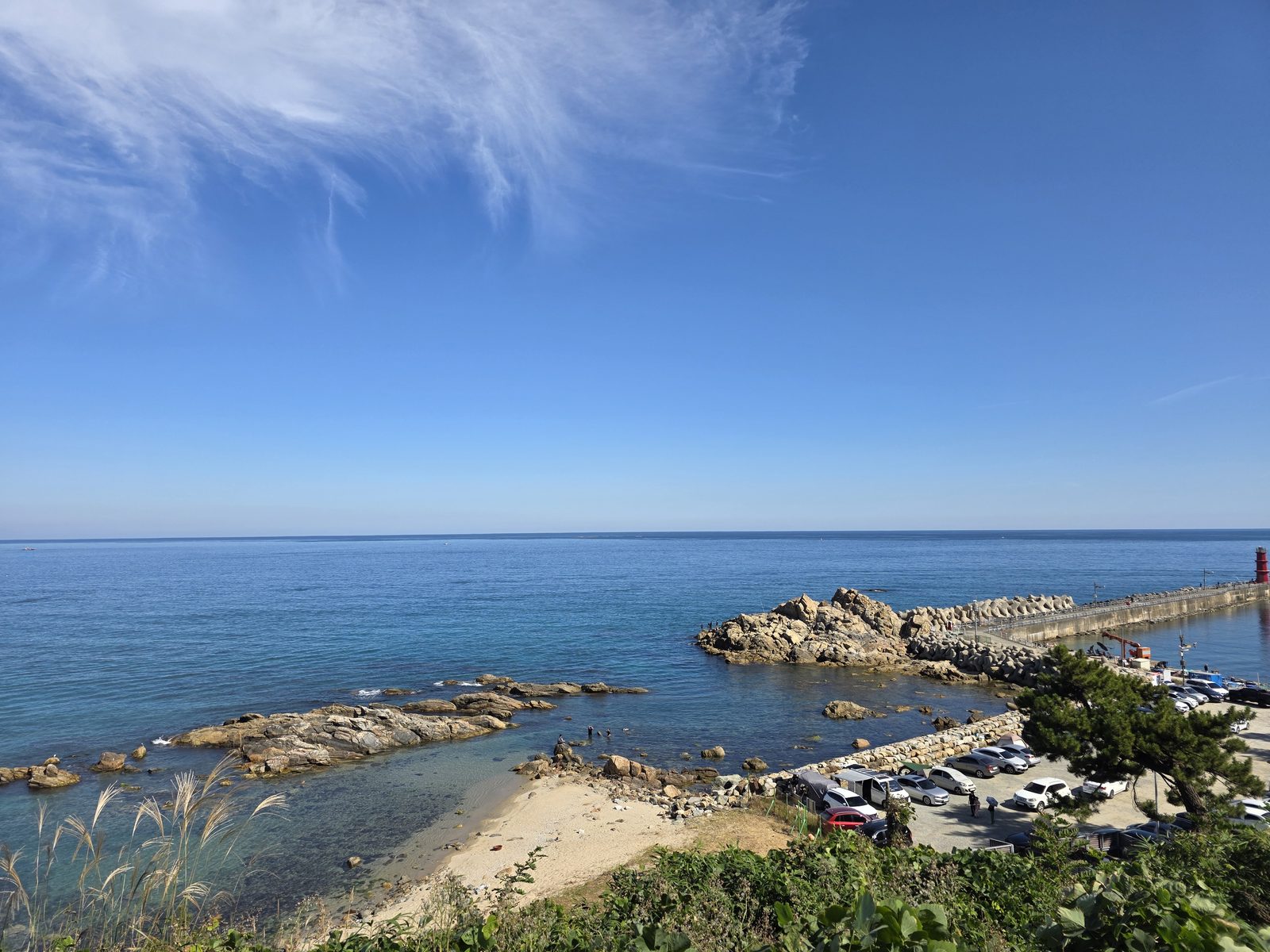
Naksansa is a Buddhist temple on a cliff above the East Sea in Ganghyeon-myeon, Yangyang-gun, Gangwon State. It is said to have been founded in 671 by the monk Uisang, and is counted among Korea's three great Gwaneum (Avalokiteshvara) pilgrimage sites together with Bomunsa on Ganghwa and Boriam in Namhae. A wildfire in 2005 destroyed more than 20 halls, which have since been rebuilt, and the temple is open to visitors again. This page is based on photos taken on a visit on October 9, 2026 and on public information from Yangyang County and the Korea Tourism Organization.
1. Location & contact
Public-transport directions are not given because we could not confirm enough reliable information. Search the address in a map app to check a route.
Address & contact
- Road address: 100 Naksansa-ro, Ganghyeon-myeon, Yangyang-gun, Gangwon State (강원특별자치도 양양군 강현면 낙산사로 100)
- Temple office phone: 033-672-2447~8 (+82-33-672-2447~8)
- Search "낙산사" or "Naksansa" in a map app
By car & parking
- Uisangdae parking lot and Naksan parking lot are listed
- The Uisangdae lot is close but fills up and you may have to wait
- The Naksan lot is described as relatively quiet
- Parking fees differ between sources, so check on site
2. Visiting information
Opening hours and admission fees differ between sources, so they are not stated here. The signs at the entrance or the temple office are the most reliable.
Opening hours
Listed as open year-round
Check hours before you go
Tickets
Issued at the entrance
Check the fee on the on-site sign
Contact
Temple office
033-672-2447~8
3. Main sights
Compiled from Yangyang County and Korea Tourism Organization information. Check the on-site signs for the exact location of each building.
- Uisangdae: A pavilion built where the monk Uisang is said to have meditated, known as a sunrise spot on the East Sea.
- Hongnyeonam: A hermitage on a sea cliff, linked to the tale of Uisang praying before a cave and meeting Avalokiteshvara after following a blue bird. Contact the temple office with questions.
- Haesu Gwaneum statue: A 16 m-tall Buddhist statue.
- Seven-story stone pagoda: The Yangyang Naksansa seven-story stone pagoda, designated a Treasure, stands within the grounds.
4. Walking tips
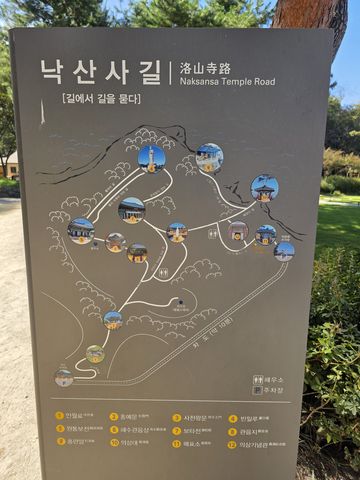
- The "Naksansa Road" map stands inside the grounds and is handy for planning a route by its numbered stops.
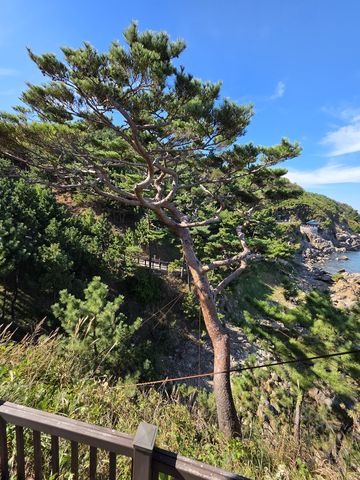
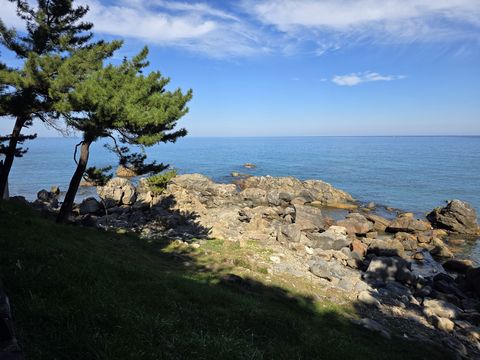
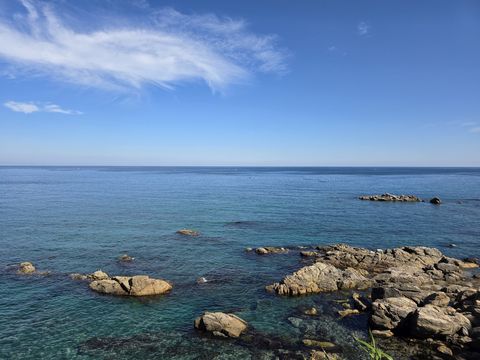
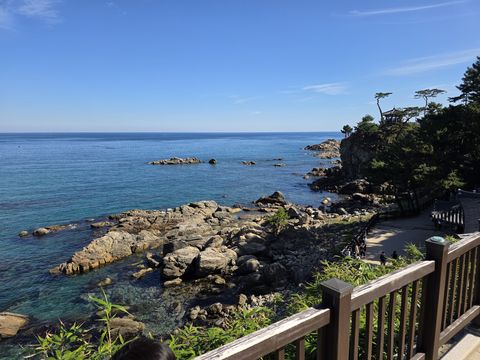
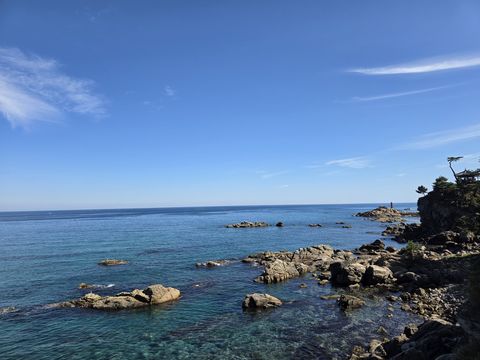
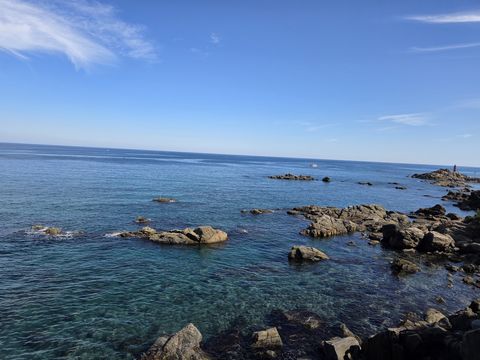
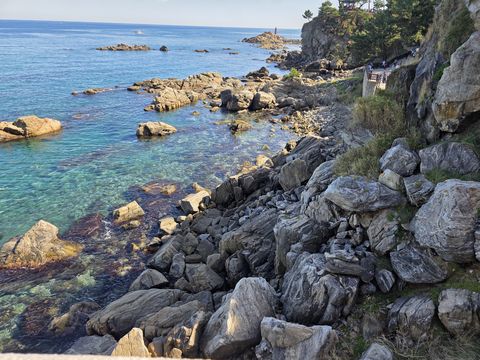
- The coastal railing path lets you look down on rocks and clear water. It runs along a cliff edge, so stay on the inner side of the railing.
- Stairs and slopes are frequent, so wear comfortable walking shoes.
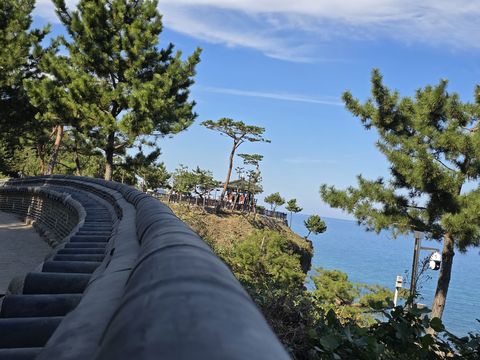
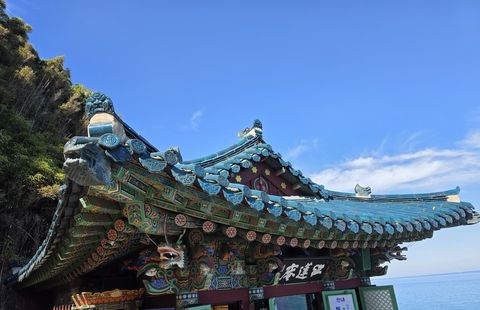
- Blue tiled roofs against the sea pine trees and coastal cliffs are the classic photo points. Please respect worshippers and photography etiquette in the halls.
- If getting around is difficult, wheelchair rental at the front information desk and accessible parking are listed. Access differs by building, so ask in advance.
- Check before you go: hours, admission and events are best confirmed with the temple office (033-672-2447~8).
5. Photo gallery
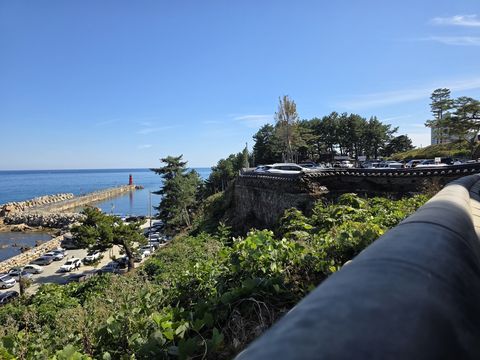
Photographed on-site on October 9, 2026. Click a photo to enlarge.
Frequently asked questions
Where is Naksansa?
It is at 100 Naksansa-ro, Ganghyeon-myeon, Yangyang-gun, Gangwon State, a temple on a coastal cliff facing the East Sea.
What are the opening hours and admission fees?
Opening hours and fees differ between sources, so they are not stated on this page. Check the signs and ticketing machine at the entrance or call the temple office (033-672-2447~8). It is listed as open year-round.
What are Uisangdae and Hongnyeonam?
Uisangdae is a pavilion built where the monk Uisang is said to have meditated and is known as a sunrise spot on the East Sea; Hongnyeonam is a hermitage on a sea cliff, tied to the story that Uisang met Avalokiteshvara there.
Is there parking?
The Uisangdae and Naksan parking lots are listed. The Uisangdae lot is close but crowded and you may have to wait, while the Naksan lot is said to be quieter. Fees differ between sources and are not stated, so check on site.
What kind of place is Naksansa?
It is a temple said to have been founded by the monk Uisang in 671 and is counted among Korea's three great Gwaneum pilgrimage sites with Bomunsa and Boriam. A 2005 wildfire destroyed more than 20 halls, which have since been rebuilt.